AI agents in startup workflows: Lessons from bees

Lately, I’ve been thinking a lot about why so many startups struggle even when they have talented people, funding, and a strong idea. AI agents
The same problems repeat over and over: rushed decisions, constant pivots, scattered tools, and teams losing focus. Engineers build, rebuild, and often end up working against a direction that keeps changing.
That’s what led me to an unusual source of inspiration: bees.
A beehive is one of the most efficient systems in nature that help things run smoothly. Bees operate with clearly defined roles, simple communication protocols, and feedback loops that keep the entire colony coordinated. Despite the complexity of the system, the hive functions without unnecessary overhead.
This concept closely relates to biomimicry. Learning from nature’s time-tested systems and applying those patterns to human challenges.
Inspired by this idea, I started thinking about startup workflows through a simple framework I call L.I.F.E.:
66gdhks57dzxise08pat7tz1inta3n.webp)
- Learn – understand the market, users, and real problems
- Interpret – translate insights into a clear product vision
- Form – build with clarity and structured requirements
- Expand – scale only when the foundation is stable
In many startups, these steps become blurred. Product vision changes faster than the development process can adapt, which creates uncertainty for development teams and software developers.
This is where autonomous AI agents and agentic workflows are becoming essential.
I am less interested in AI as a magic box that produces random answers. I am more interested in AI as a cognitive operating system for structured workflows. Instead of relying on a single large language model (LLM) to handle everything, I see more value in a multi agent architecture where a swarm of intelligent agents executes specific tasks using agentic retrieval augmented generation (RAG).
Each agent can support a different part of the development process. Researching markets, analyzing data, identifying user needs, generating personas, or preparing documentation for product teams. These agents can also process inputs from sources such as social media, internal reports, or customer feedback to create structured outputs.
This approach led me to experiment with multi-agent systems using Google ADK. What I find compelling about this framework is that it allows teams to build modular systems where agents perform clearly defined tasks.
Agents can access tools, connect to internal systems such as a knowledge base, analyze data, and pass outputs between each other. Instead of relying on a single response from an LLM, the system creates a structured process where each step contributes to the final result.
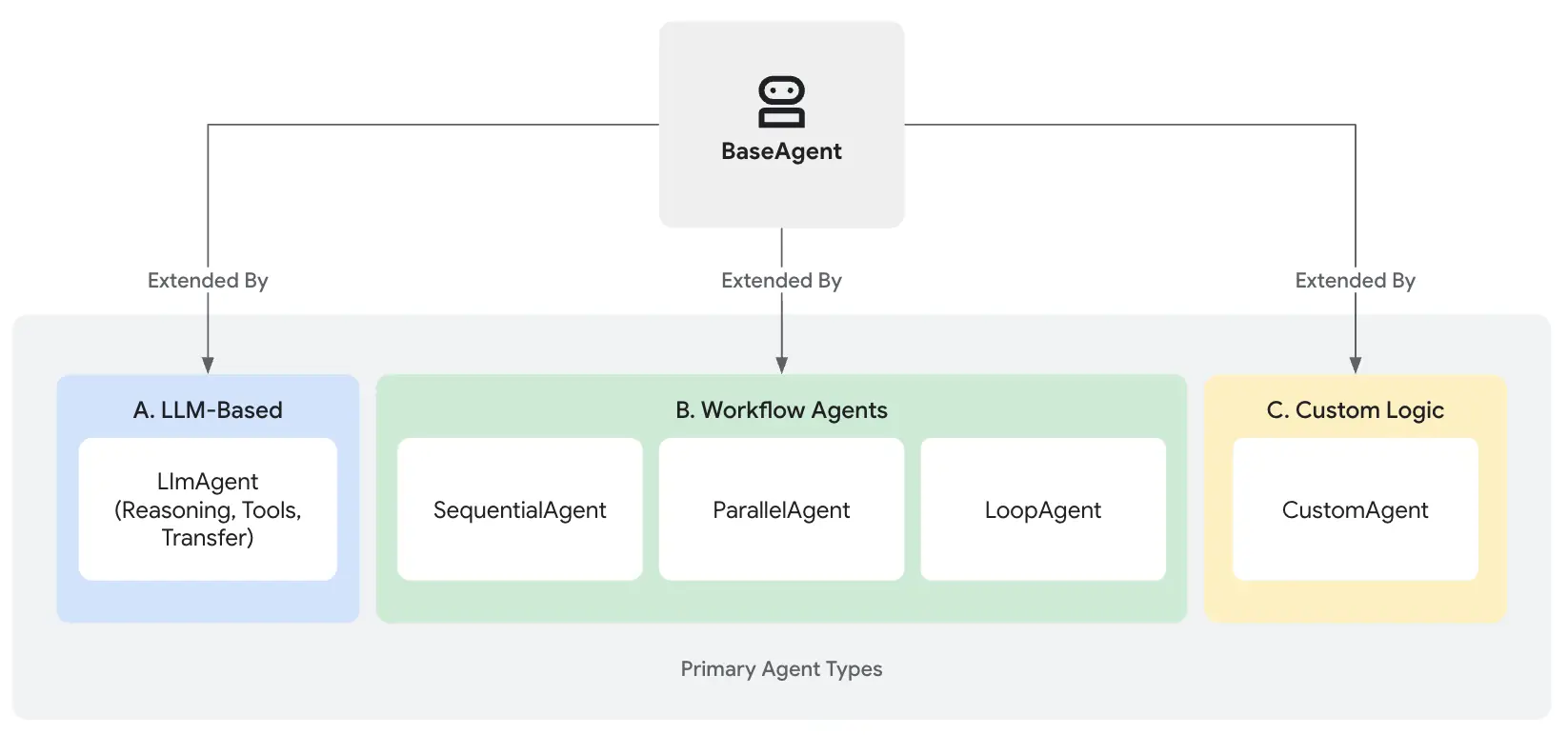
For product teams and project management, this structure matters.
If discovery is weak, everything built afterward becomes fragile. If interpretation is wrong, development teams move in the wrong direction. And when startups scale before establishing stable workflows, the entire system can start collapsing under its own complexity.
My goal with this approach is not to replace people. Quite the opposite.
Humans remain responsible for defining the why — the vision, business goals, and strategic direction. AI agents can assist with the how by performing research, analyzing information, structuring documentation, and supporting the development process.
The more I experiment with these multi agent systems and robust LLM evaluations, the more I see their potential. Implementing eval driven development reduces startup chaos, improves clarity for product teams, and creates better inputs for engineers building scalable AI infrastructure.
AI agents are not perfect systems, but they can support a more efficient workflow.
For me, that is the real promise of AI-driven systems: not only faster execution, but better and more structured ways of building products.
This blogpost is a summary of the video presentation from our meetup. You can watch full talk here.
fvvlv7zxg0t2qyd9ycvoahlllnrp5z-small.webp)
Product manager with over 12 years of international experience, building AI products and critical infrastructure for early-stage FinTech companies. Having launched more than 33 products with a combined value of $1.4 billion, he guides partner teams through the shift from outdated processes to multi-agent orchestration and rapid AI-augmented prototyping. His communication skills now extend into sales as well, turning that product and AI expertise into new partnerships.