Curious minds ask questions: Interview with Dr. Michaela Musilová
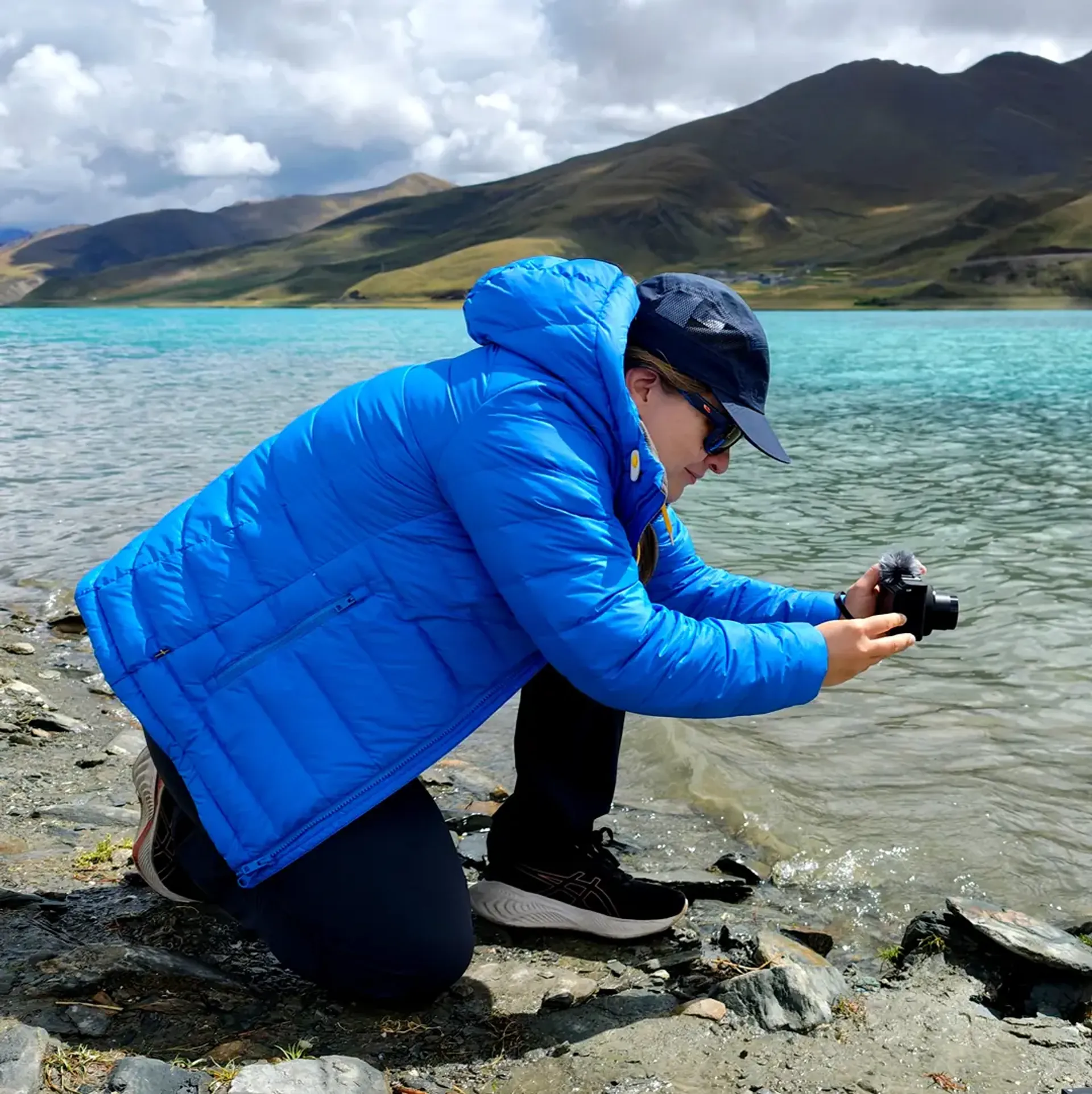
"I approach the world like a detective. I look for what doesn't quite click, what raises more questions than it answers. That's usually where the curiosity takes over and where I start digging." curious
──────────────────────────────────────────────────────
Whether you are searching for life on Mars or building software, progress often starts the same way: with a question.
In technology, we spend a lot of time trying to understand problems before solving them. We ask the right questions, challenge assumptions, test ideas, and keep looking until things click. Science works in a similar way.
That is one of the reasons why our collaboration with Dr. Michaela Musilová feels so natural. As an astrobiologist, explorer, and leader of simulated Mars missions, she approaches the unknown much like a detective: looking for what does not quite fit, asking one more question, and following curiosity wherever it leads.
We spoke with Michaela about curiosity, problem-solving, working with limitations, and why some of the most valuable discoveries begin with a question that refuses to go away.
Was there a moment during an expedition or research project when you already had a good enough answer, but something made you keep looking? What happened?
As a scientist, curiosity is the foundation of everything we do. In an ideal world, we would keep searching for more answers and asking more questions. In reality, we are often limited by funding, resources, and time.
During an expedition to Greenland, we were studying how life survives in glacier environments. At the time, very little was known about the variety of life forms that can exist there. We got exciting results early on. But instead of answering our questions, those findings raised more. That motivated us to collect far more data than we'd originally planned.
Those are the moments you hope for. Sometimes you arrive expecting to learn one thing and leave with much more than you imagined.
Curiosity is often described as a spark or passion. But in your work, it seems to require much more discipline, patience, and focus. How do you understand curiosity today?
After almost two decades in research, curiosity is much more of a marathon than a sprint. Designing projects, organizing expeditions, collecting data, analyzing results, these are all long processes. Things may not go according to plan. Some projects take longer than expected, and some don't produce the results you hoped for.
But that's part of science. When you finally find an answer to something you've been working on for years, it's one of the most rewarding moments a scientist can experience.
How do you handle frustration when things are not going as planned and the answers are not coming?
I like a quote often attributed to Winston Churchill: "Success is going from failure to failure without loss of enthusiasm." Science works the same way. Patience is an essential part of being a scientist, although it is not always easy. There will be setbacks and unexpected challenges. But you're working toward a larger goal, and that keeps you moving. Every obstacle teaches you something, even when a project doesn't deliver what you expected, you're still learning.
Where is the line between healthy doubt and overcomplicating things? How do you know when a question is helping you go deeper and when it is just slowing you down?
Practical limitations often decide that for you. Budgets, equipment, time… They all determine how far a project can go. Sometimes the decision to stop isn't about scientific curiosity being satisfied. It's about reaching the limits of what's currently possible. That is why scientists need to balance curiosity with practicality.
I've had to pause projects many times. Once, in the Arctic, I collected a large amount of data but couldn't continue due to time and funding. It took almost ten years before I returned to a similar environment and finally found the answers I'd been sitting with for nearly a decade. Science sometimes requires patience on a much larger scale than we'd like.
Before a serious research project begins, how do you know you are asking the right question? Is there a question that usually starts your process of exploration?
There's no such thing as a wrong question in science. Even disappointing results have value. If you expect an extremophile to survive under Martian conditions and it doesn't, that still tells you something important about the limits of life. Every result moves research forward.
As for where I start: I approach the world like a detective. I look for what doesn't quite click, what raises more questions than it answers. That's usually where the curiosity takes over and where I start digging.
Can a lack of resources, comfort, or access sometimes become an advantage?
I would not say that a lack of resources is an advantage in itself. However, it often encourages creativity and improvisation.
For example, during a simulated Mars mission, you only have access to the equipment, materials, and knowledge that your crew brings with them. Communication with Mission Control is delayed to 20 minutes, and outside help is limited. When a problem arises, you have to solve it with the resources available to you.
Those situations are not ideal, but it does help humans sometimes think out of the box, and find very different solutions to what they might normally do.
Can you think of an example when you faced an urgent problem but did not have the proper tools or resources to solve it?
During one simulated space mission, we had serious issues with our water supply. Contamination in one container, a leak in the other. We stopped the leak by “McGyvering” a solution using duct tape, available tools, and a 3D-printed component. However, we'd already lost a significant portion of our supply. We stopped showering, simplified meals, and rationed every litre. Made hard decisions about which plants to keep watering.
It wasn’t easy, but the crew adapted, reprioritized, and completed the mission. Constraints push people to become more resourceful.
In expeditions, the summit looks like the goal. But in research, the real summit may be something else. What does a “summit” mean to you in science?
In science, we always hope to collect as much data as possible and answer as many questions as we can. However, during expeditions, the health and safety of the team must always come first.
Reaching a summit may seem like the ultimate goal, but there are times when conditions make it the wrong decision. In those situations, it is important to be willing to turn around, even when the summit is within reach.
That happened during one of my Astro Seven Summits expeditions. A member of our team was not feeling well enough to continue, so we made the decision to stop before reaching the summit. It was a difficult choice, but it was absolutely the right one.
We collected all the scientific samples we needed, which meant that our research was not affected by the decision. In the end, bringing both the team and the scientific data home safely was the biggest success of the expedition.
How do you cope with ego in situations like that?
I learned a long time ago to put my ego aside. Reaching a summit or a particular destination is something I see as a cherry on top, a bonus, not the primary objective.
My experience has taught me that it is always about the people. It is about working together, making responsible decisions, and adapting when circumstances change. In extreme environments, people who treat it as a CV achievement start taking unnecessary risks. And that's dangerous.
For me, teamwork and safety will always matter more than reaching the top. Success is not measured by a summit alone. It is measured by whether the team achieved its goals and returned home safely.
In science, expeditions, and product development, there is always a moment when something is declared done. But is it ever truly done? What does “done” mean to you?
In many ways, "done" simply means "good enough."
Nothing in science is ever truly finished. There are always more questions. But at some point, you have to be satisfied that you've done the best possible work under the circumstances.
I try to avoid perfectionism. I often follow the 80/20 rule: if a project has achieved 80% of its intended value and meets all the important objectives, it may be time to move on rather than spend excessive effort chasing the last 20%. That final part is a bonus. If there's time for it, great. If not, the project has already achieved what truly matters.
Curiosity looks the same whether you're on a glacier in Greenland or deep in a codebase. You find something that doesn't quite click. You keep pulling at it. You don't stop until you understand what's really happening.
That's why this conversation felt familiar. And why we keep supporting Michaela, not just as a sponsor, but as people who recognise the same drive.

Social media specialist focused on brand visibility and consistent, high-quality content, primarily through copywriting and visuals across a variety of social channels. She keeps refining what drives better reach and engagement.