The week the Anthropic IPO revealed AI spending

The Anthropic IPO filing shows what enterprise AI demand really looks like, while the price of the models underneath keeps falling.
Week of 26 October - 1 November 2026 · by the Hotovo AI team
TL;DR
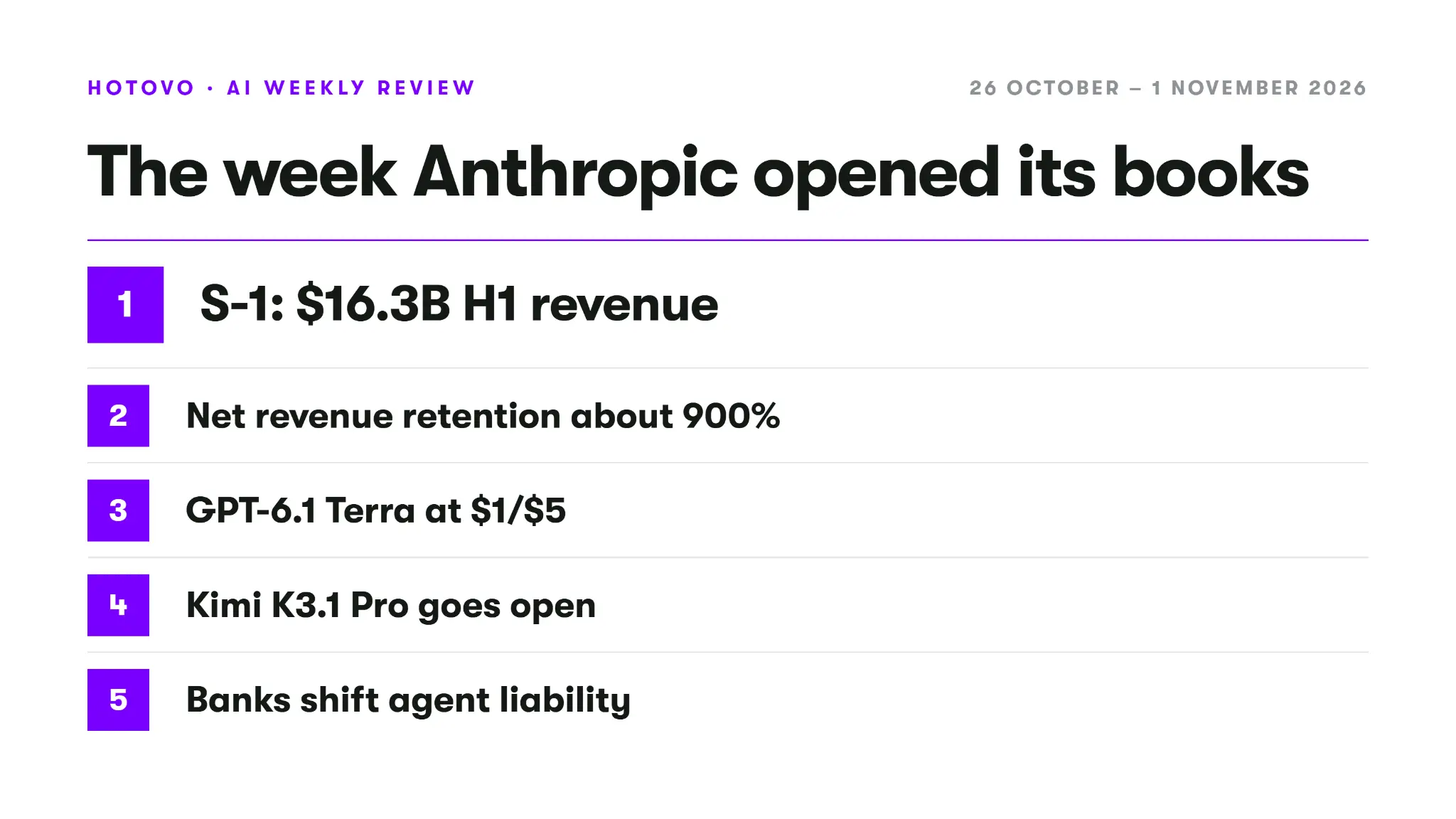
- Anthropic filed to go public, and its numbers show businesses buying AI at enormous scale.
- Existing customers keep expanding their AI usage far faster than most budgets assume.
- OpenAI's new mid-tier model makes computer-use agents much cheaper to run in production.
- Moonshot's newest Kimi model brings near-frontier quality to open weights you can host yourself.
- Offbeat: big US banks are blocking outside AI agents and moving the risk onto customers.
For three years, enterprise AI spending has been argued over with surveys and anecdotes. On 26 October it got an audited answer. The Anthropic IPO filing is the most complete look yet at a frontier lab's customer economics, and it reads more like a utility's prospectus than a research lab's. If your company buys AI, you are somewhere in those numbers.
The main story: Anthropic's IPO filing shows enterprises buying AI by the meter
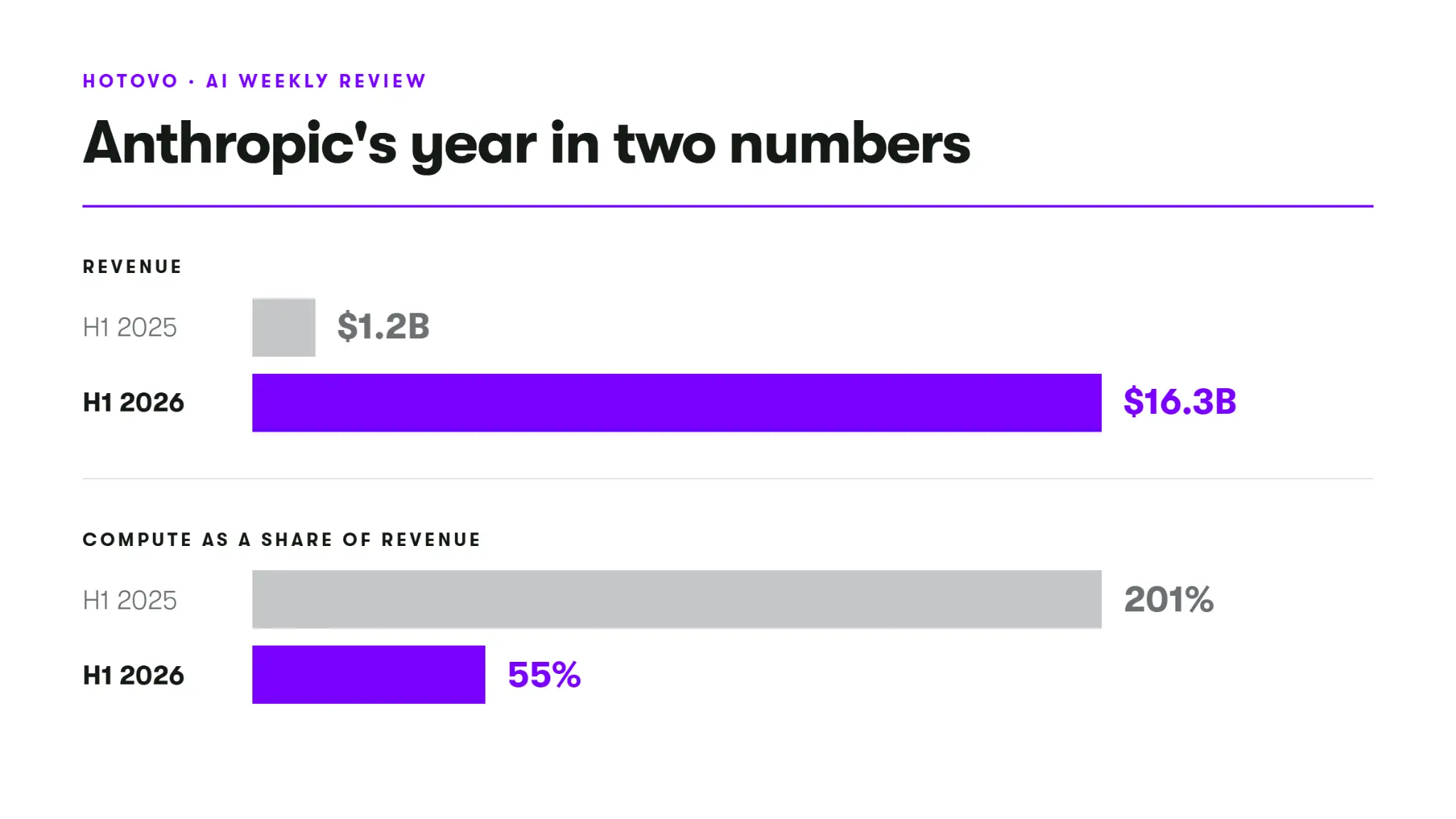
The Anthropic IPO filing on 26 October revealed plans to list on Nasdaq as ANT, with price and share count still blank. First-half 2026 revenue reached $16.3B, up from $1.2B a year earlier. Net revenue retention is about 900%: existing customers spend roughly nine times what they did a year ago. More than 11,900 customers pay over $100,000 a year and about 250 pay over $10 million. Compute and infrastructure costs fell from about 201% of revenue to 55%. The $80.7B net loss is mostly a $72.4B noncash charge tied to convertible notes and similar instruments; the GAAP operating loss was $693 million, against $1.6B in adjusted operating income. Anthropic says Opus 5.5 cuts cost per task by about 40% versus Opus 5. Trillion-dollar valuations remain press reporting, not filing data.
Why it matters - the Hotovo read
Read the filing as a buyer and two things matter more than the valuation. A 900% retention rate means usage inside a customer expands far faster than anyone budgets for, and because much of that spend is metered, growth lands straight on operating costs instead of a fixed contract. Meanwhile the vendor's own growth depends on shipping a better, cheaper model every few months, and this week's price war shows the floor is still moving. The model you chose this spring is unlikely to be the right one, or the right price, next spring. The response is architectural. Meter AI cost per feature, not per invoice. Keep an evaluation set built with your domain experts, so a new model can be tested on your real tasks in a day rather than a quarter. And keep the model behind an interface you own. In the agentic research assistant we built for an energy market intelligence provider, OpenAI and Anthropic models already run side by side, so a release or price change becomes a configuration decision instead of a rewrite.
Also this week
Agent labour got cheaper again
OpenAI launched GPT-6.1 Terra, a mid-tier model built for computer use, at $1 per million input tokens and $5 per million output, half the price of GPT-6.1 Sol. OpenAI says it finishes agent tasks over three times faster than Sol. Separately, The Information reports that discounts of more than 30% helped OpenAI win Replit spend from Anthropic. For teams automating back-office screens, the business case just moved.
Open weights closed the gap again
Moonshot's Kimi K3.1 Pro scores 55 on the Artificial Analysis Intelligence Index, three points behind Claude Opus 5.5, at $2/$10 per million tokens, with weights due by 4 November. For companies that cannot send data to a US cloud, near-frontier self-hosting is becoming realistic, once the still-unannounced license terms and the model's behaviour pass review.
The offbeat one: your bank says the agent is you
At least five of the largest US banks, including JPMorgan and Citi, are blocking outside AI agents from customer accounts. From 24 November, Wells Fargo's terms treat actions by an agent using a customer's credentials as the customer's own. We build agent access the other way round: scoped, revocable credentials, human approval before money moves, and audit trails under ISO/IEC 42001, so one blocked integration never takes a product down.
AI tip of the week: race a cheaper model before you renew
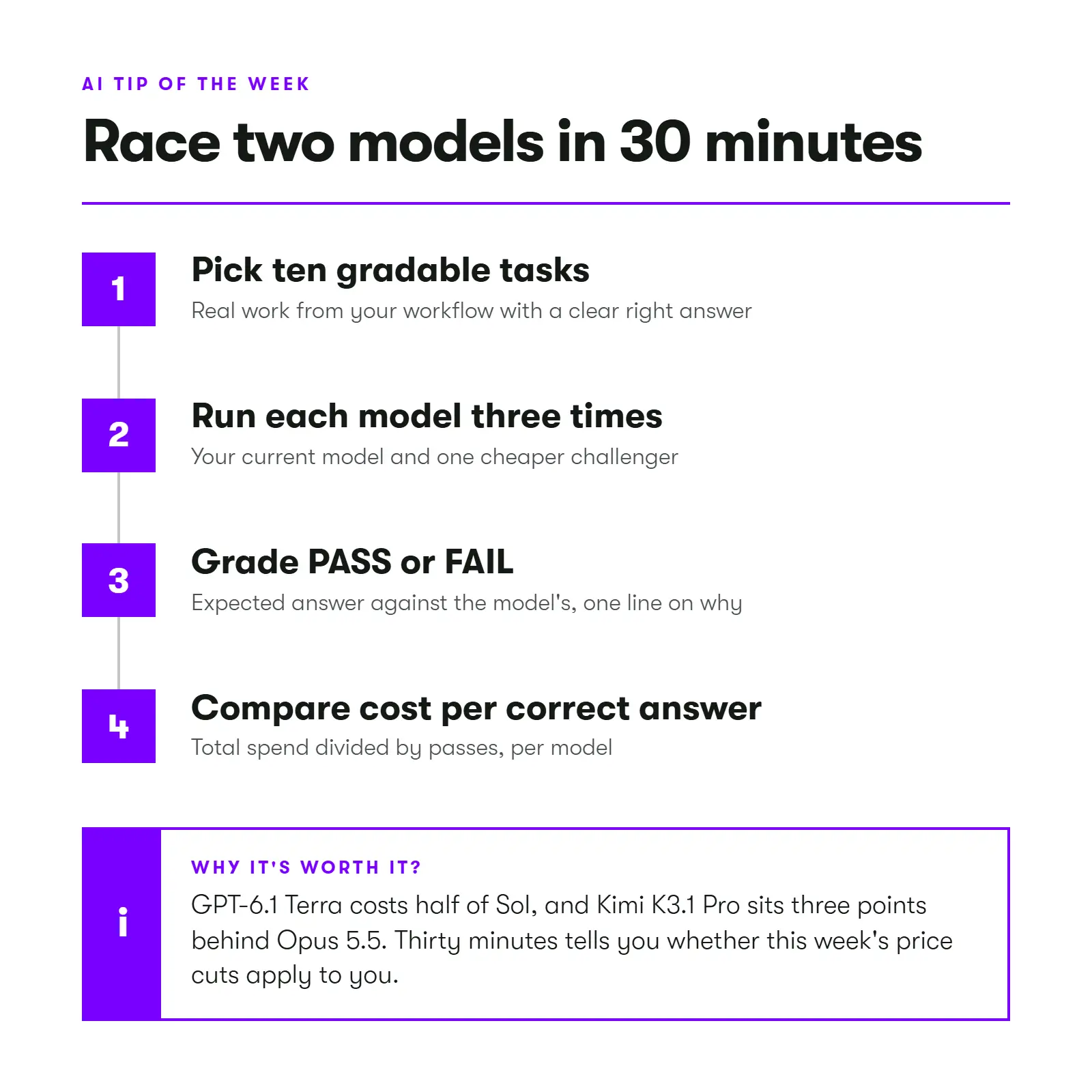
Pick ten real tasks from your workflow that have a clear right answer. Run each through your current model and one cheaper challenger, three times each. Grade with this prompt: "Here is the expected answer and the model's answer. Reply PASS or FAIL, then one line on why." Compare cost per correct answer. Thirty minutes tells you whether this week's price cuts apply to you.
The bottom line: open your own books too
The Anthropic IPO filing confirms that businesses have moved from AI pilots to AI line items. Prices per task are falling, volumes are rising, and the biggest vendors will soon answer to quarterly targets. Opening the books works both ways: know exactly what each model costs you, what it earns you, and how fast you could switch.
Sources
Newsletters used: The Deep View, The Neuron, WhatsUp in AI, Creator Secrets, The AI Break, Exponential View, Linas's Newsletter, Neatprompts, The Batch, This Week in AI Club, AI Valley, AI Edge, Aakash Gupta, Javarevisited.
- Anthropic S-1 filing (SEC)
- CNBC: Anthropic's IPO filing
- HackerNoon: Anthropic's S-1 numbers explained
- OpenAI: Introducing GPT-6.1 Terra
- Lindy: GPT-6.1 Terra pricing and benchmarks
- The Next Web: OpenAI's discounts win Anthropic customers
- Moonshot: Kimi K3.1 Pro
- Artificial Analysis: Kimi K3.1 Pro index score
- American Banker: banks are blocking external AI agents
- TokenPost: Wells Fargo AI agent terms
- Linas's Fintech Pulse #422